Free practice · Updated November 2026
Free NGAT practice for Kindergarten
Original questions, one at a time, with the answer and a short explanation after every choice. No sign-up and no timer.
 Questions from NGAT Test PrepFree app for iPhone, iPad and AndroidGet the app
Verbal practice
These picture concepts use familiar objects or visible attributes.
Question 1
Which picture does not belong?
Correct answer: D.
Show answer
Answer: D. Five pictures show the object outside the frame. The picture with the ball does not.
Question 2
Which picture does not belong?
Correct answer: F.
Show answer
Answer: F. Five pictures show animals. The street lamp is not an animal.
Question 3
Which picture does not belong?
Correct answer: B.
Show answer
Answer: B. Five pictures have exactly one object changed in the lower row. The picture with the tree and the head on top does not.
Question 4
Which picture does not belong?
Correct answer: F.
Show answer
Answer: F. Five pictures show furniture. The bus is not furniture.
Question 5
Which picture does not belong?
Correct answer: E.
Show answer
Answer: E. Five pictures show a different object between two matching objects. The picture with the pencil and the book does not.
Category complete
Your Verbal practice score
0 correct
Nice work exploring the rules. This short set is for practice only; it is not a school score.

Keep practicing in NGAT Test Prep
New free practice questions every day, each with an explanation.
Nonverbal practice
Shape patterns can change by count, rotation, placement, or more than one feature at once.
Question 1
Which answer completes the pattern?

Correct answer: B.
Show answer
Answer: B. The pattern is horizontal stripes 2 squares wide. The missing piece continues it exactly.
Question 2
Which answer completes the pattern?
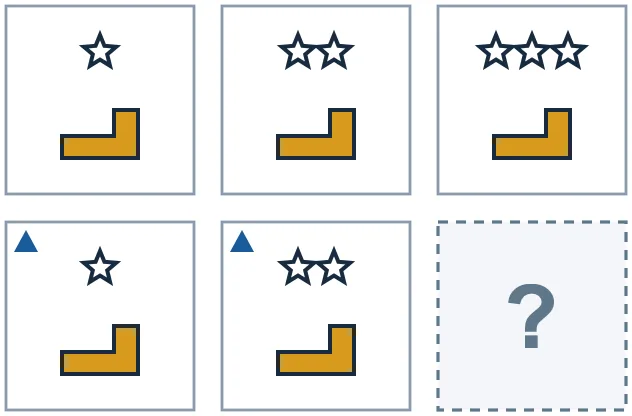
Correct answer: A.
Show answer
Answer: A. The two rows differ only in the corner mark, and that difference stays the same in every column.
Question 3
Which answer completes the pattern?
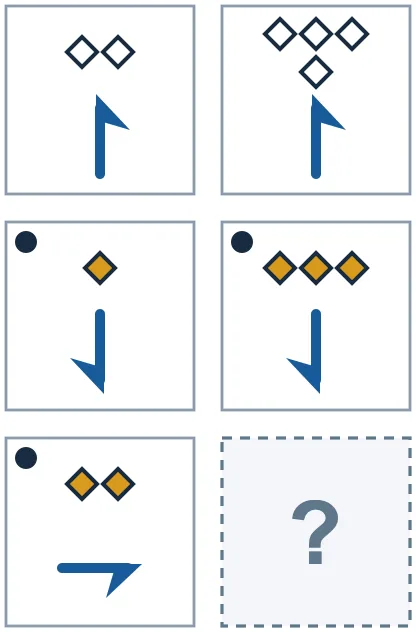
Correct answer: D.
Show answer
Answer: D. The change: add 2 small shapes. Do the same to the third picture.
Question 4
Which answer completes the pattern?
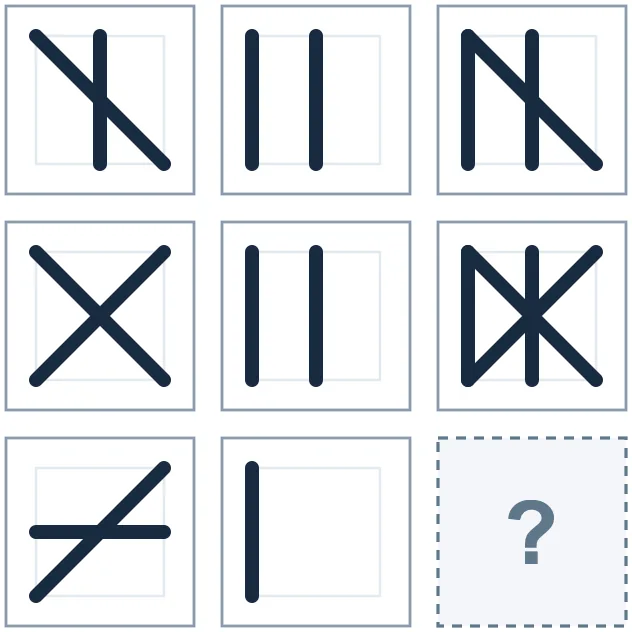
Correct answer: C.
Show answer
Answer: C. Put the two figures together: every line of both appears.
Question 5
Which answer completes the pattern?
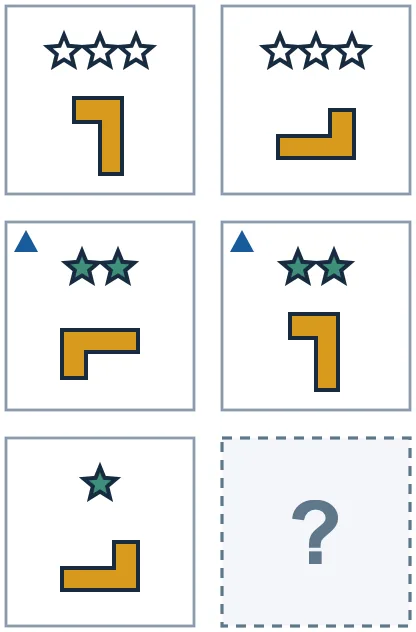
Correct answer: A.
Show answer
Answer: A. The change: turn the boot shape a quarter turn clockwise. Do the same to the third picture.
Category complete
Your Nonverbal practice score
0 correct
Nice work exploring the rules. This short set is for practice only; it is not a school score.
Keep practicing in NGAT Test Prep
New free practice questions every day, each with an explanation.
Quantitative practice
Number items may use sequences, small equations, or grids.
Question 1
Which answer completes the pattern?
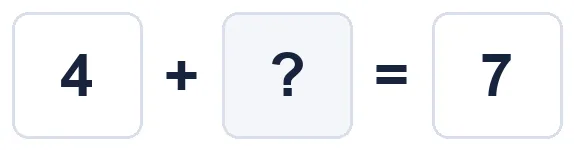
Correct answer: B.
Show answer
Answer: B. Think: which number goes with 4 to make 7? 7 − 4 = 3. Check: 4 + 3 = 7.
Question 2
Which answer completes the pattern?
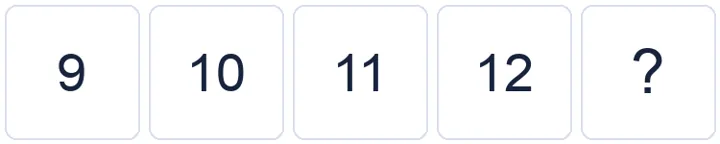
Correct answer: B.
Show answer
Answer: B. Each number is 1 more than the one before: 12 + 1 = 13.
Question 3
Which answer completes the pattern?
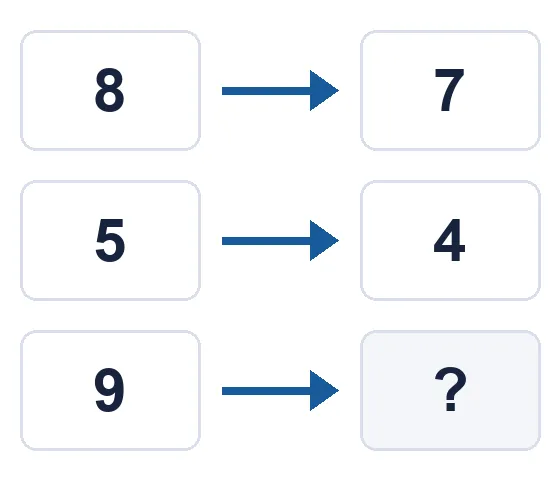
Correct answer: B.
Show answer
Answer: B. The machine takes away 1: 9 − 1 = 8.
Question 4
Which answer completes the pattern?
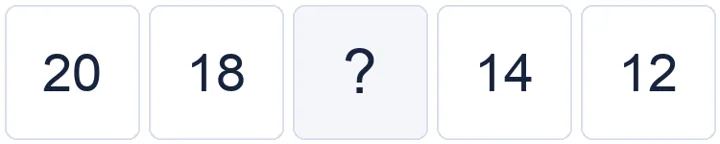
Correct answer: A.
Show answer
Answer: A. Each number is 2 less than the one before: 18 − 2 = 16, then 16 − 2 = 14.
Question 5
Which answer completes the pattern?

Correct answer: A.
Show answer
Answer: A. The group 2, 2, 4 repeats again and again, so the next number is 2.
Category complete
Your Quantitative practice score
0 correct
Nice work exploring the rules. This short set is for practice only; it is not a school score.
Choose another gradeKeep practicing in NGAT Test Prep
New free practice questions every day, each with an explanation.
About this grade’s practice
For a kindergartner, begin with concrete pictures and short pauses. Ask which five objects share an idea before naming the odd one, and let your child count or point when numbers appear. The three sets introduce picture concepts, shape patterns, and number relationships separately. They are original app practice items, so their result can guide a conversation about a rule without standing in for a school assessment.
The kindergarten Verbal questions show six pictures and ask which one does not belong: sometimes the difference is where things sit, sometimes it is what kind of thing each picture shows, and once it is whether a picture changes from the top row to the bottom row. The Nonverbal set begins with wide stripes that continue into a gap, then a two-row grid where a count grows, an analogy that adds two marks, two line drawings that combine into a third and a quarter-turn change. Quantitative uses large digits: a visual equation where four and an unknown make seven, counting up by one, a number machine that takes one away, counting back by two and a repeating group of numbers. At this age the school version keeps each test to 30 minutes, and young children often need breaks well before that, so playing one category per sitting is plenty. Let your child say the numbers out loud and touch each picture while counting; that habit catches most early slips.
MHS describes three separate NGAT tests. The time limit per test is 30 minutes for this grade band. A school may choose which tests to give. Publisher information checked November 2026. This page has a shorter, untimed practice set and does not estimate a school score.
A parent’s guide to this kindergarten set
Use the first item in each category as a warm-up. Ask your child to describe what they see before naming an answer. When a choice is wrong, look at the highlighted correct one and compare the details. A useful question is, “Which part of your idea still works, and which part needs to change?” That keeps the review about reasoning rather than speed.
For a child in kindergarten, read the prompt aloud without pointing to the right option. Pause at a shape or number diagram and let the child explain it in their own words. If the prompt uses a word they do not know, define it plainly before they choose. The practice then measures whether they can work through the relation, not whether they recognized one unfamiliar word.
Verbal
These picture concepts use familiar objects or visible attributes. Five options usually follow one idea and one does not. Ask your child to name the idea shared by the majority; then test whether the odd choice truly breaks it. The task is about the relationship among pictures, not reading a word aloud.
Nonverbal
Shape patterns can change by count, rotation, placement, or more than one feature at once. It helps to narrate one change at a time: first the number, then the position, then the orientation. The right tile must satisfy the whole pattern.
Quantitative
Number items may use sequences, small equations, or grids. The child needs to compare how numbers change, then apply the same rule. A useful check is to work backward from a candidate answer. If the rule fails on an earlier example, try a different one.
Each category is arranged in a gentle easy-to-harder order from the app’s own questions. The format is intentionally brief. If a child tires after a category, that is a natural stopping point. You can return another day and revisit the explanation without saving an account or handing over an email address.
Questions parents ask
Which NGAT level or format fits kindergarten?
NGAT uses grade-based forms rather than the lettered levels shown for some other tests. Ask the school which of the three NGAT tests it gives in kindergarten.
How should we use these practice questions?
Try one category at a time. After each answer, read the explanation together and ask your child to describe the rule. The short score describes only this practice set.
Are these NGAT questions from the publisher's test?
No. Every question here is an original practice item from NGAT Test Prep. These pages and apps are independent of MHS (Multi-Health Systems).
Can we continue after this kindergarten set?
Yes. NGAT Test Prep is a free download for iPhone, iPad, and Android and includes free daily practice questions. The other grade pages here also have different original items.
Publisher sources
Test structure and timing checked November 2026. Your school’s current administration plan controls local details.
NGAT is published by MHS (Multi-Health Systems). These pages and apps are independent and are not affiliated with or endorsed by the publisher. Every question is an original practice item from the app, not a publisher test item. iOS: Neobile LLC. Android: KITEBLOOM LLC.