Free hair color quiz · TrueColors: Color Analysis
What hair color suits me?
The hair colors that suit you follow your undertone and depth. Warm coloring wears golden, copper and caramel shades; cool coloring wears ash, beige, cool brown and soft black; light coloring stays light and deep coloring stays deep. Answer eight questions to see your season’s hair shades, then try them on your own photo in TrueColors.

TrueColors: Color Analysis
Find your color season and try it on your own photo
Free to download for iPhone, iPad and Android.
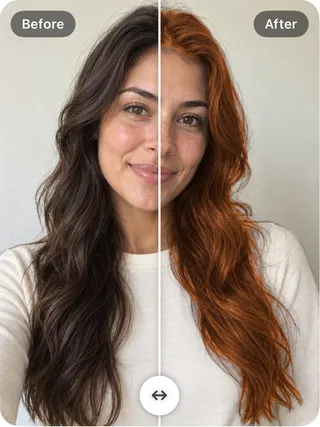
Answer with your natural coloring in daylight. Tap one option per question. Nothing you choose leaves your browser.
1 of 8 · Undertone
After a day in the sun, your skin usually…
2 of 8 · Undertone
Which lipstick looks most natural on you?
3 of 8 · Undertone
Which jewelry do people compliment you in?
4 of 8 · Undertone
The inside of your wrist in daylight shows veins that look…
5 of 8 · Depth
Your natural color at the roots is…
6 of 8 · Depth
Your eyebrows are…
7 of 8 · Contrast
Next to your skin, your natural hair color…
8 of 8 · Contrast
In photos, your eyes look…
Answer all eight questions to see your hair shades. Without JavaScript, find your season’s shades in the list below.
TrueColors: Color Analysis shows these shades on your own hair from one selfie, as solid color, highlights, ombré or balayage, with a before-and-after divider to compare.
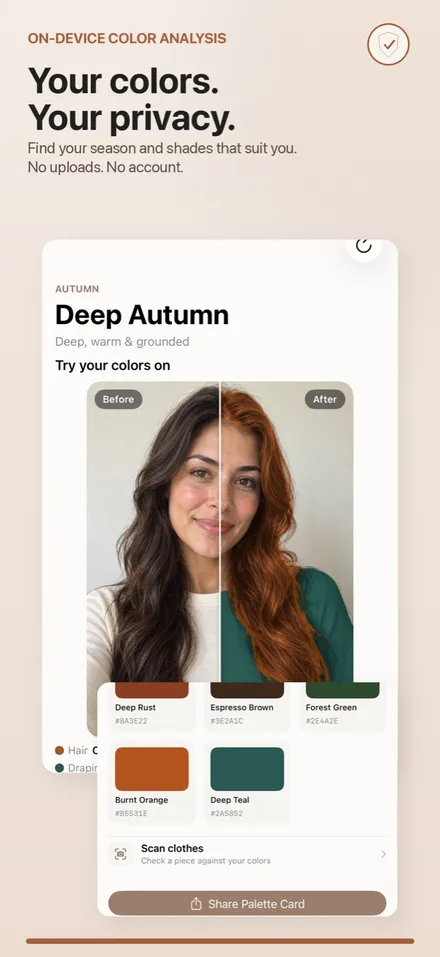
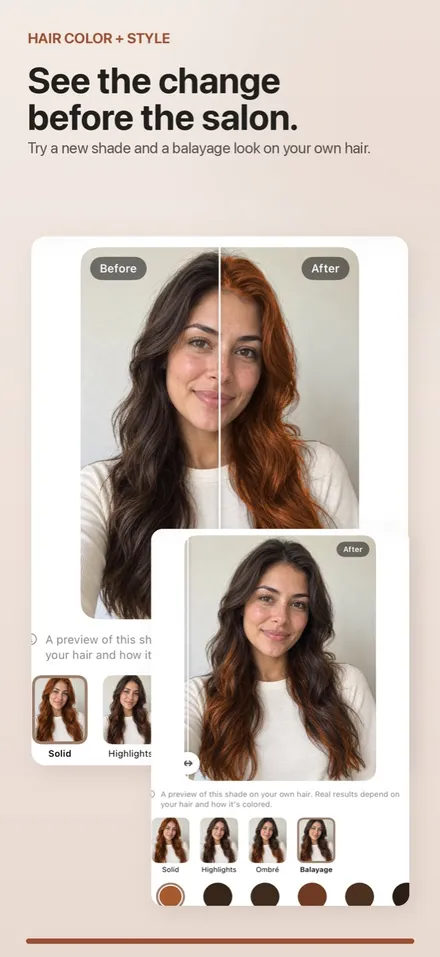
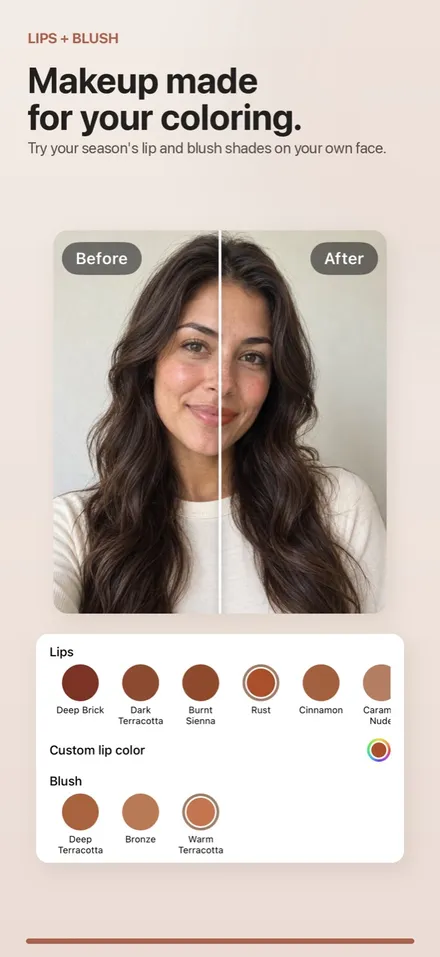
Everything in the app
- Every hair shade of your season on your own photo, with highlights, ombré and balayage
- Any lip and blush shade, and any palette color draped on you
- A check of every piece of clothing you want, and your makeup, metals and neutrals palettes
- Your season from one daylight selfie, analyzed on the device
- No account needed
The rule behind flattering hair color
Colorists and color analysts look at the same three things: whether your skin leans warm or cool, how light or deep your natural coloring is, and how much contrast there is between hair, skin and eyes. A shade that repeats your undertone makes skin look even and bright; one that fights it can make skin look red, sallow or gray. Depth decides how far from your natural level a color can go before it looks like a wig, and contrast decides whether soft, blended shades or clear, saturated ones sit better.
The quiz turns your answers into those three scores and places them on the same 12-season wheel the TrueColors app uses. Each season comes with its own hair shades, taken straight from the app.
Hair shades by season family
Springs: light and golden
Honey, caramel, strawberry blonde and copper. Warm and clear, never ashy or flat.
Light Spring: Light Golden Blonde, Honey Blonde, Warm Caramel, Strawberry Blonde, Light Golden Brown.
True Spring: Golden Brown, Warm Honey, Copper, Caramel, Light Auburn.
Bright Spring: Rich Golden Brown, Bright Copper, Warm Chestnut, Honey Highlights, Deep Warm Brown.
Summers: soft and ash
Ash blonde, mushroom and cool ash brown. Smoky rather than golden.
Light Summer: Cool Ash Blonde, Soft Beige Blonde, Light Ash Brown, Cool Sandy Blonde.
True Summer: Cool Ash Brown, Soft Mid Ash, Cool Mushroom, Smoky Brown, Ash Blonde Highlights.
Soft Summer: Cool Ash Brown, Soft Mushroom, Cool Mid Brown, Smoky Taupe.
Autumns: rich and warm
Chestnut, auburn, bronze and espresso. Depth with warmth.
Soft Autumn: Warm Mid Brown, Golden Caramel, Soft Auburn, Honey Brown, Warm Bronze.
True Autumn: Warm Chestnut, Auburn, Bronze Brown, Espresso, Honey Highlights.
Deep Autumn: Espresso, Dark Chocolate, Deep Auburn, Dark Chestnut, Warm Black-Brown.
Winters: deep and cool
Cool espresso, soft black, blue-black and even cool burgundy.
Deep Winter: Cool Espresso, Blue-Black, Dark Cool Brown, Soft Black, Cool Plum-Black.
True Winter: Soft Black, Cool Dark Brown, Blue-Black, Cool Espresso.
Bright Winter: Jet Black, Blue-Black, Cool Dark Brown, Cool Burgundy.
Example: golden tans, coral lips, dark brows
Someone who tans easily, looks best in coral and gold, cannot read their veins, has medium brown roots, dark brows, medium contrast and in-between eyes lands nearest to True Autumn, with Deep Autumn and True Spring close behind. Their shades would be warm chestnut, auburn, bronze brown, espresso, honey highlights: warm, fairly deep and rich rather than bright.
Highlights, ombré or all-over color?
The season tells you which shades; the technique decides how much of your hair changes. All-over color is the biggest change and the most upkeep. Highlights weave a lighter shade from your palette through your natural color and grow out softly. Ombré and balayage keep your roots and move toward a lighter shade at the ends, which suits people who want change without a hard regrowth line. TrueColors shows all four on your own photo, coloring hair from roots to ends while keeping its shine and texture, so you can take the version you like to your colorist.
A quiz is a starting point. Indoor light, a tan, dyed hair or makeup can all shift your answers, which is why the result lists two neighbouring seasons. A selfie in daylight, read by the app, gives a second opinion with how sure the reading is.
Sources
Questions people ask
How do I know what hair color suits me?
Match the hair color to your undertone and depth. Warm undertones look best in golden, copper and caramel shades; cool undertones in ash, beige and cool brown or black. Stay within about two levels of your natural depth for a natural look, and go further only if your contrast is high.
What hair color suits warm skin?
Warm Springs suit honey and caramel blondes, strawberry blonde and copper; warm Autumns suit chestnut, auburn, bronze brown and golden caramel. The deeper your coloring, the deeper the warm shade can go.
What hair color suits cool skin?
Light and Soft Summers suit ash blonde, beige blonde and mushroom brown; Winters suit cool espresso, soft black and blue-black. Golden and brassy tones tend to make cool skin look sallow or red.
Should I go lighter or darker?
Lighter shades soften features and darker ones add contrast. If your coloring is low-contrast, small changes in either direction look most natural; high-contrast coloring can carry a bigger jump. Trying the shade on a photo first is the cheapest way to find out.
Can I see the hair color on my own photo before dyeing?
Yes. TrueColors finds your season from a daylight selfie and opens your result with your own photo in a new hair color chosen for you. You can try every shade of your season or any color, as solid color, highlights, ombré or balayage, and drag a divider to compare before and after. Photos are analyzed on your device and never uploaded.
